in the context of business expansion in southeast asia, how companies choose cloud servers to adapt to the network topology of their own businesses is the key to determining service performance and compliance risks. this article provides systematic evaluation ideas from the five dimensions of demand, geography, topology, security and interconnection to help enterprises build a robust and scalable cloud network architecture in the cambodian market to improve user experience and operation and maintenance efficiency.
understand business requirements and traffic characteristics
first, clarify the business type, concurrency and traffic peak. end-user-oriented applications and b2b systems have different requirements for latency and stability, and offline batch processing focuses on bandwidth throughput. divide core applications and secondary applications based on business characteristics, determine the service nodes that need to be deployed locally and the tolerable delay threshold, and provide a quantitative basis for subsequent network topology design.
evaluate geographic location and bandwidth latency
cambodia’s network links and international exports determine access delays and packet loss rates. it is necessary to test the rtt and packet loss conditions from the target user group to the cambodian computer room, and consider alternatives for nodes in surrounding countries. based on the sensitivity of the business to delays, select the location of the computer room closest to the user or with better interconnection capabilities to reduce the risk of experience fluctuations.
design redundant and highly available network topology
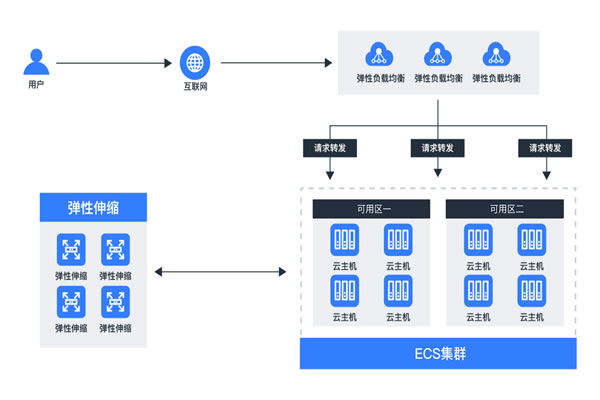
high availability relies on multiple layers of redundancy: multi-az deployment, load balancing and link redundancy are essential elements. adopt active-active or active-backup strategies for critical services, and implement cross-availability zone failover and automatic traffic migration. the network topology should reserve expansion interfaces to support future horizontal expansion and disaster recovery drills to ensure sustainable operation of the business under emergencies.
topology design for security and compliance requirements
network topology must be synchronized with security policies, isolate the management plane from business traffic, and use segmented vpc/vlans and strict access control lists. consider ddos protection, intrusion detection and log centralization. understand the data sovereignty and compliance requirements in cambodia and the jurisdictions where customers are located, and limit sensitive data to compliance nodes or use encrypted transmission and storage.
internet solutions and edge acceleration strategies
choosing the appropriate interconnection method affects user experience and cost: dedicated lines, vpns and internet egresses each have their own emphasis. for globally or regionally distributed users, combining edge cdn and local nodes can significantly reduce latency and improve stability. evaluate interconnection providers for interconnect quality and routing diversity to avoid single points of disruption.
operation and maintenance observability and cost optimization
network topology design should consider monitoring, alarming and capacity prediction, and establish end-to-end observability of links and application layers. optimize bandwidth usage and instance size through traffic analysis and elasticity policies to ensure that slas are met while avoiding resource waste. review the topology regularly to adapt to business growth and traffic changes.
summary and suggestions
summary: when enterprises select cloud servers and design network topology in cambodia, they should focus on business needs and weigh regional latency, redundancy and security compliance, interconnection quality and observability. it is recommended to conduct a small-scale pilot first and verify delay and failover, and gradually promote local deployment to ensure that the topology both meets current needs and has the ability to expand.

- Latest articles
- How To Achieve Stable Operation Even If There Is A Cheap Thailand Vps Through Configuration Tailoring
- Why Do E-commerce Websites Prefer High-defense Servers In California, USA, To Protect Against Traffic Impact?
- Technical Guide: How Can Newbies Quickly Test And Go Online With Singapore Cn2 Direct Connection?
- Recommended Vps Cambodia Images And Automated Deployment Templates For Developers
- Zelda Scheduled Hong Kong Server And Local Server Delay Comparison And Selection Suggestions
- Japanese Cloud Server Download And Migration Practical Guide In Offline Installation Scenario
- Comparing The Specific Requirements For German Independent Servers On The Capabilities Of Operation And Maintenance Teams From Hosting To Self-management
- Network Diagnosis Method For Vietnam Server Cf Game Commentary In A Cross-border Battle Scenario
- Comparison Of Performance Of Japanese Cn2 Lines In Operator Interconnection In Different Regions
- Are There Cloud Servers In Taiwan? Latest Market Supply And Purchase Channel Inventory
- Popular tags
-

Practical Cases Of Cloud Server Hybrid Architecture In Philippines And Cambodia In Data Disaster Recovery
based on real practical cases of cloud server hybrid architecture in the philippines and cambodia, the key points of architecture design, data synchronization, failover, operation and maintenance, and compliance are analyzed to help build a reliable data disaster recovery solution in southeast asia. -

Cambodia Vps Recommendation Is Suitable For Development, Testing And Production Environment Deployment Comparison
this article compares the deployment of cambodia vps recommendations in development, testing and production environments. it provides professional advice from the perspectives of network connectivity, resource scalability, security compliance and operation and maintenance support to help choose a suitable deployment strategy. -
Practical Deployment Manual For Using Tencent Cambodia Cloud Server From Scratch
a practical deployment manual for using tencent cambodia cloud server from scratch, covering account preparation, network planning, instance and image selection, security configuration, backup and monitoring, and cost optimization suggestions. it is intended for technicians who need to deploy cloud services in cambodia.